
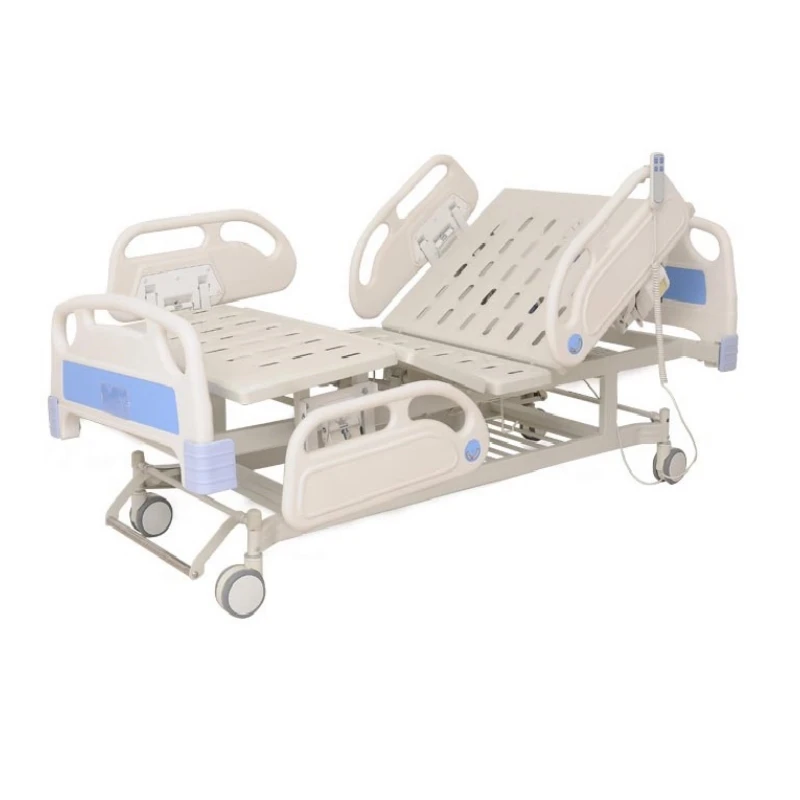
Advanced Electric Bed for Patients Solutions for Poland Healthcare

Integrating ergonomic engineering and EU medical standards to optimize patient recovery and caregiver efficiency across Polish medical facilities.

Current Landscape of Patient Mobility in Poland

Analyzing the intersection of aging demographics and healthcare infrastructure in the Polish market.

Poland is currently experiencing a significant shift in healthcare demand due to an aging population, particularly in urban centers like Warsaw and Krakow. This has led to a surge in requirements for high-quality hospital furniture that can support long-term geriatric care and acute rehabilitation.

The Polish healthcare system is increasingly focusing on the "deinstitutionalization" of care, moving towards home-based recovery. Consequently, there is a growing demand for a versatile folding medical bed that provides clinical-grade support while remaining adaptable to residential spatial constraints.

Economically, Polish medical facilities are upgrading their equipment to comply with stringent EU medical device regulations (MDR). This regulatory pressure is driving the replacement of manual systems with automated solutions, specifically the modern patient bed, to reduce the physical burden on nursing staff.

Evolution and Trajectory of Patient Care Equipment

From basic mechanical support to intelligent, integrated patient mobility systems.

Market Development History

In the early 2000s, the Polish market was dominated by basic manual beds and heavy steel frames. The focus was primarily on durability rather than patient ergonomics or caregiver ease of use.

Between 2010 and 2020, the introduction of semi-electric actuators marked a turning point. Facilities began adopting the patient transfer trolley to improve the safety of internal logistics and reduce patient drop incidents during ward transfers.

Since 2021, the integration of IoT and smart sensors has become the new benchmark. Modern equipment now features pressure-relieving mattresses and precise electronic positioning to prevent pressure ulcers in long-term care.

Future Development Trends

AI-Driven Positioning

Integration of AI to automatically adjust bed angles based on real-time patient vitals to optimize respiratory function.

Eco-Friendly Materiality

Shift towards sustainable, antimicrobial polymers and recyclable alloys to meet Poland's green healthcare initiatives.

Modular Interconnectivity

Designing furniture that seamlessly connects with digital health monitoring systems for centralized nursing stations.

Future Trends and Strategic Outlook

Anticipating the next wave of innovation in medical furniture engineering.

Smart Automation
Transitioning from simple electric controls to autonomous weight-distribution systems.
Ergonomic Precision
Advanced kinetics to minimize caregiver spinal strain during patient repositioning.
Anti-Infection Coating
Implementing nano-silver coatings to reduce nosocomial infections in hospitals.
Rapid Deployment
Optimizing folding mechanisms for emergency medical response units.

Industry Outlook

Google search trends for "modern medical furniture Poland" indicate a 25% increase in interest for smart home-care solutions. This suggests that the boundary between hospital and home care is blurring, requiring products that are both professional and aesthetically pleasing.

The future will likely be dominated by integrated systems where the bed is no longer just a piece of furniture, but a diagnostic hub that monitors patient movement and sleep quality, reporting directly to the medical staff's mobile devices.

Localized Application Scenarios in Poland

Real-world deployment of medical equipment across various Polish healthcare settings.

01. Warsaw Public Hospital Intensive Care

Deployment of high-specification electric beds to manage critical care patients, focusing on rapid positioning for emergency interventions and respiratory support.

02. Krakow Geriatric Rehabilitation Center

Utilization of specialized patient beds with advanced side-rail systems to prevent falls among the elderly population while facilitating easy transfers.

03. Silesian Home-Care Services

Integration of a compact folding medical bed in residential apartments, allowing family caregivers to provide professional-grade care in a limited home space.

04. Gdansk Emergency Medical Services (EMS)

High-mobility patient transfer trolleys used for seamless movement between ambulances and hospital emergency departments to ensure patient stability.

05. Wroclaw Specialized Orthopedic Clinic

Implementation of specialized hospital furniture designed for post-surgical recovery, emphasizing pressure redistribution and precise limb elevation.

Brand Story

Global Development History of Hebei Zhaofa Technology Co., Ltd.

Foundational Precision

Started with a commitment to industrial excellence, focusing on the core engineering of durable medical frames and basic support systems.

Technological Pivot

Transitioned into electronic actuation, developing proprietary motor systems to enhance the functionality of patient care beds.

EU Standard Alignment

Invested heavily in R&D to meet CE and MDR certifications, allowing our products to enter the strict European market, including Poland.

Global Logistics Network

Established a robust supply chain to ensure rapid delivery and local support for medical facilities across the globe.

Innovation Leadership

Currently leading the industry in integrating smart-sensing technology to solve the pain point of caregiver fatigue and patient discomfort.

Common Questions on Medical Furniture in Poland

Expert answers to the most frequent technical and regulatory queries from Polish clinicians.

Which electric bed for patients is best for long-term elderly care in Poland?

For long-term care, we recommend beds with multi-positional electric controls and integrated pressure-relief mattresses to prevent bedsores and ease caregiver workload.

Do your hospital furniture products comply with EU MDR regulations?

Yes, all our products are manufactured according to ISO standards and carry the necessary CE certifications required for the Polish and broader EU markets.

What are the advantages of a folding medical bed for home use?

A folding medical bed allows for clinical-level support in residential settings while being easily storable or transportable, which is ideal for temporary home recovery.

How can a patient transfer trolley improve ward efficiency?

By providing a stable, ergonomic platform for movement, these trolleys reduce the time spent on patient transfers and significantly lower the risk of injury to staff.

Is the patient bed design adaptable for different patient weights?

Our beds are engineered with reinforced steel frames and heavy-duty actuators to accommodate a wide range of patient weights while maintaining stability.

What maintenance is required for automated hospital furniture?

Regular lubrication of joints and electrical safety checks are recommended every six months to ensure the longevity and safety of the electric components.

Optimize Your Care Facility Today

Contact our specialists for tailored medical furniture solutions delivered directly to Poland.

Contact Us Now
  • wechat
  • 8615031846685

If you are interested in our products, you can choose to leave your information here, and we will be in touch with you shortly.